Removal of Moles, Skin Tags, Cysts, Lumps and Bumps at Enigma Healthcare in Tarporley
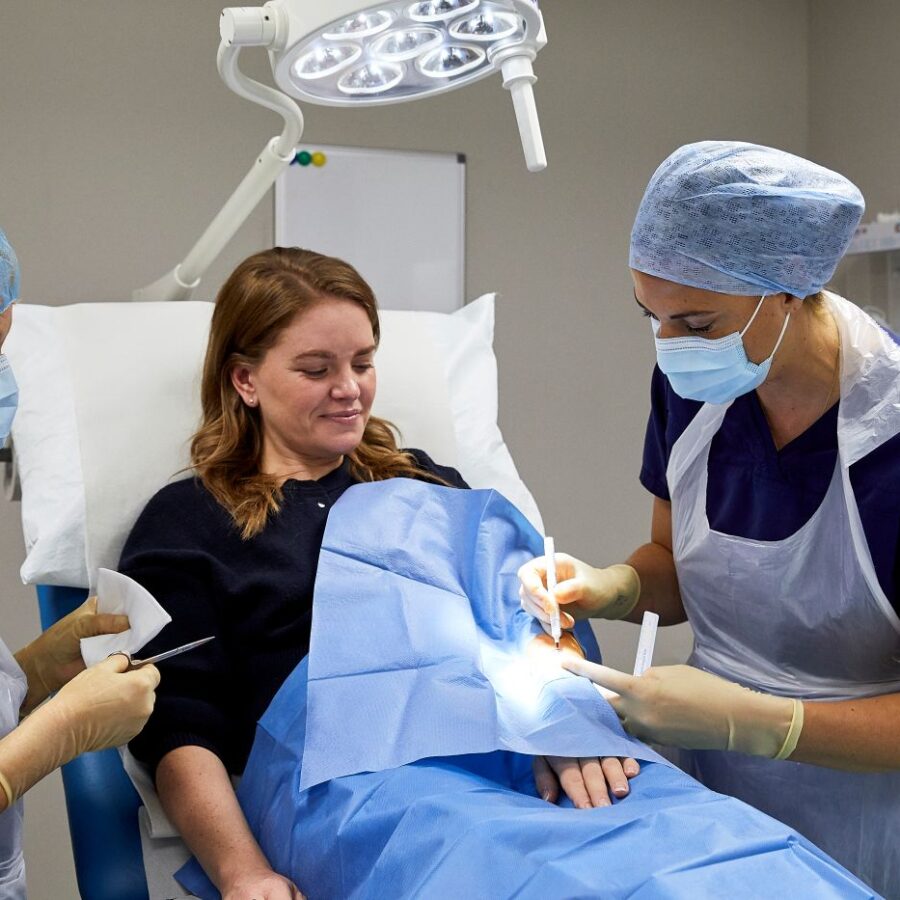
Most moles, skin tags, cysts and lumps are harmless, but they can catch on clothing, become sore or simply bother you. At Enigma Healthcare in Tarporley, Cheshire, you start with a skin lesion concern appointment with one of our consultants or specialist GPs. They examine your lesion, explain your options and, if removal is right for you, agree a plan before the procedure is carried out under local anaesthetic in our minor surgery suite. Every lesion we remove is sent to a laboratory for analysis, so you know exactly what it was.
Book a skin lesion concern appointment Call us on 01829 863 331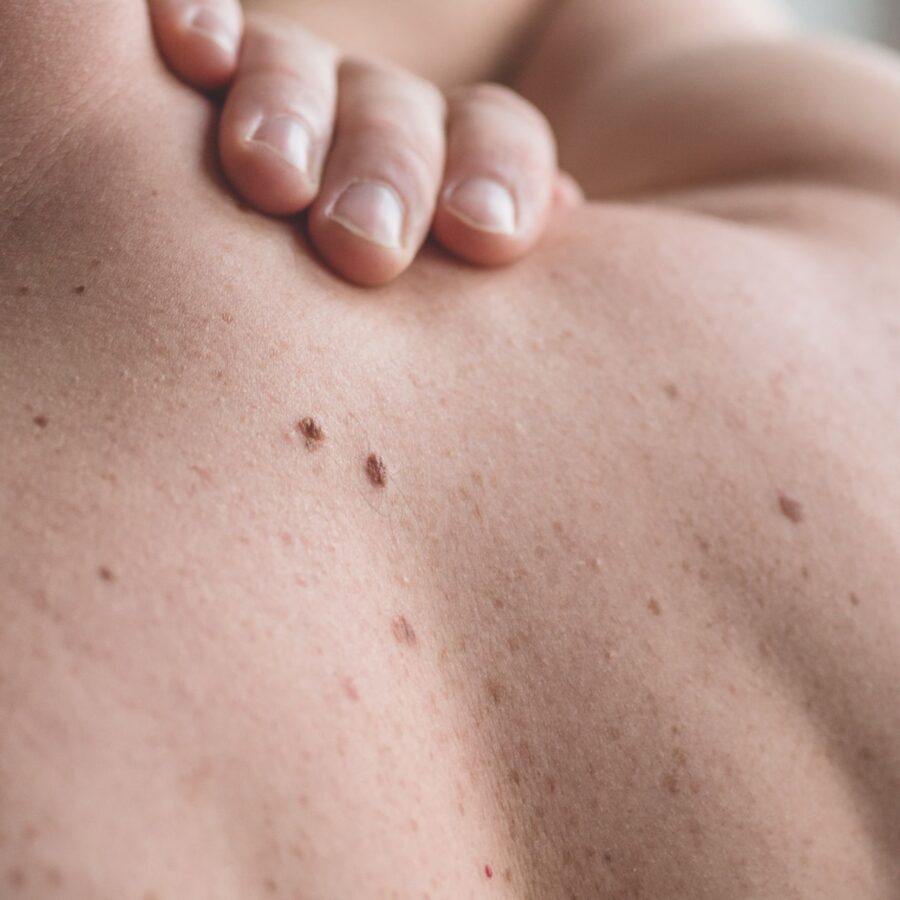
Skin lesion removal is a minor procedure to take away an abnormal growth on or under the skin, such as a mole, skin tag, cyst, wart or lipoma. It is usually done under local anaesthetic in a single outpatient appointment, and you can go home straight afterwards.
A skin lesion is any area of skin that looks or feels different from the skin around it. Most are benign (non-cancerous). People choose to have them removed because they are uncomfortable, keep getting irritated, or affect how they feel about their appearance.
You should have a skin lesion checked if it is new, changing, bleeding, itching or not healing. These changes are not always serious, but they should be assessed by a clinician rather than watched at home.
Signs that a lesion needs prompt assessment:
For regular checks of your moles, see our Mole Check and Mole Mapping services.
If a lesion is benign but bothers you, removal is a personal choice. The NHS does not usually remove harmless lesions for cosmetic reasons, which is why many people choose private skin lesion removal.
Book a skin lesion concern appointment Call us on 01829 863 331The method depends on the type of lesion, its size, where it is on your body and whether it needs to be examined in a laboratory. Your clinician will recommend the approach that gives the best balance of a complete removal and a neat scar.
The lesion is cut out with a small margin of normal skin and the wound is closed with stitches. This is the standard method for cysts, lipomas and any lesion that needs full laboratory analysis.
The lesion is shaved level with the surrounding skin, with no stitches. It suits raised moles and skin tags.
A small, spoon-shaped instrument scoops away surface lesions such as seborrhoeic keratoses.
Liquid nitrogen freezes the lesion, which blisters and falls away over 1 to 3 weeks.]

MB.BS, BSc (Hons), MRCGP, DCH, DRCOG, DFRSH

MRCP(UK), MRCP(Dermatology)

MBBS, FCPS DERM, MRCP UK, MRCP DERM

Mpharm BMBS MRCGP MSc PGDIP, Diploma Diabetes care
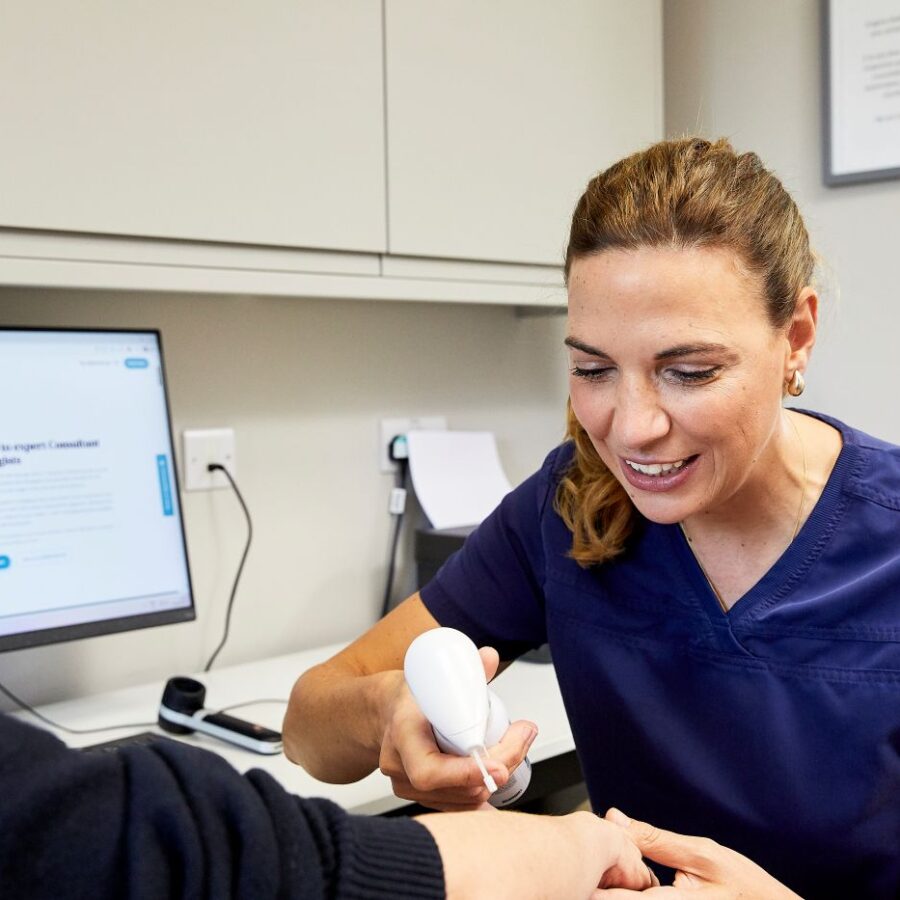
A consultant or specialist GP examines your lesion, often with a dermatoscope, and asks about your medical history and any changes you have noticed. We only remove a lesion once a clinician has seen it and agreed that removal is appropriate.
Your clinician explains the recommended method, what scar to expect and the aftercare. You only go ahead once you are happy and have given consent.
Your procedure is booked as a follow-up appointment. The area is numbed with a small local anaesthetic injection: you will feel a sharp scratch, then pressure but no pain.
Most procedures take 20 to 45 minutes, including preparation.
The wound is dressed and you are given written aftercare instructions.
Removed tissue is sent for histology. Results usually take a few weeks, one of our team will contact you with the results and provide next steps – if required.
In-person assessment by one of our Consultant Dermatologists, of a mole, lump, bump or skin lesion, using dermoscopic imaging where needed.
The cost of private skin lesion removal depends on the type, size and number of lesions and the removal method. Simple skin tag removal costs less than surgical excision of a cyst or lipoma. Your clinician will always confirm the cost before any procedure goes ahead. See our price guide page, for accurate costs please call our reception team on 01829 863 331.
The NHS usually removes skin lesions only when there is a medical reason, such as suspected skin cancer, recurrent infection or significant symptoms. Harmless lesions removed for cosmetic reasons are generally not funded, so many people choose private removal.
You should not feel pain during the procedure because the area is numbed with local anaesthetic. The injection stings briefly, and the site may feel tender for a few days afterwards.
Any procedure that cuts the skin leaves a scar, but most fade to a fine pale line over 12 to 18 months. Your clinician will choose the method most likely to give a neat result for your lesion and its location.
Most people go back to normal activities the same day or the next day. Wounds with stitches usually heal within 1 to 2 weeks, and stitches are removed after 5 to 14 days depending on the area.
No. You can book a skin lesion concern appointment with Enigma Healthcare directly. If you are using private health insurance, your insurer may ask for a GP referral before authorising treatment.
Yes. Every removal starts with a skin lesion concern appointment with one of our consultants or specialist GPs. They examine the lesion, confirm what it is likely to be and agree whether removal is appropriate. Your procedure is then booked as a follow-up appointment.
Some policies cover removal when there is a medical reason, but cosmetic removal is not usually covered. We accept insurance from major providers including AXA, Bupa and Vitality. Check your cover and get an authorisation number before your appointment.
We do not recommend removing moles or skin tags at home. Creams, freezing kits and tying off can cause burns, infection and scarring. Home removal also means the lesion cannot be checked, so a skin cancer could be missed.
Yes. Private skin tag removal at Enigma Healthcare starts with a skin lesion concern appointment, where a consultant or specialist GP confirms the growth is a skin tag and agrees the best way to remove it. Skin tags are usually snipped or cauterised under local anaesthetic, and you can go home straight afterwards. The NHS does not usually remove skin tags for cosmetic reasons.
Yes. Most lipomas and cysts can be removed under local anaesthetic in a single appointment. Very large or deep lumps may need an ultrasound scan first, and occasionally a referral for surgery in hospital.
Not ready to book a skin lesion concern appointment just yet, or want to know more about mole removal, how it is done or what to expect afterwards? Leave us your details and your question below, and a member of our minor surgery team will get back to you personally.
Prefer to talk straight away? Call us on 01829 863 331.