Targeted relief for painful joints, tendons and bursae, from experienced specialists.
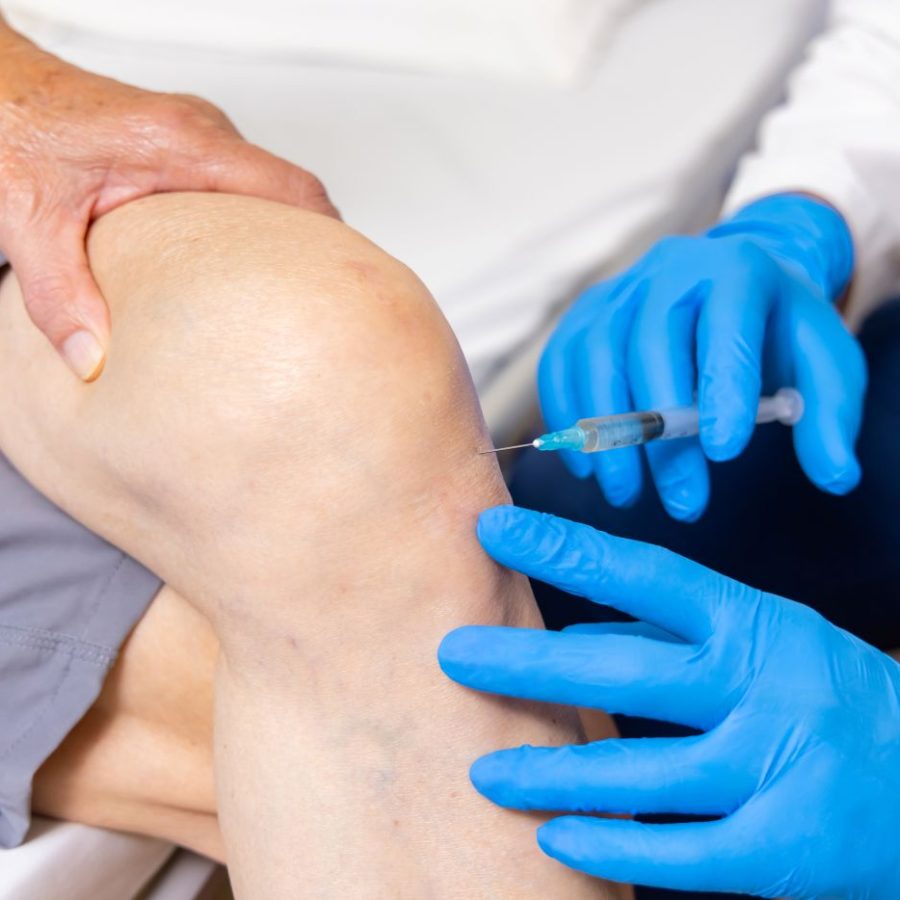
When arthritis, bursitis or a tendon problem is stopping you sleeping, working or staying active, an injection can ease the pain and inflammation and help you get moving again.
At our clinic in Tarporley, cortisone (steroid) injections are given by experienced doctors after a full assessment, so you only have an injection if it’s the right treatment for you. Where precision matters, the injection can be guided by ultrasound, so it goes exactly where it’s needed.
You don’t need a GP referral to book.
Book a joint injection appointment Call us on 01829 863 331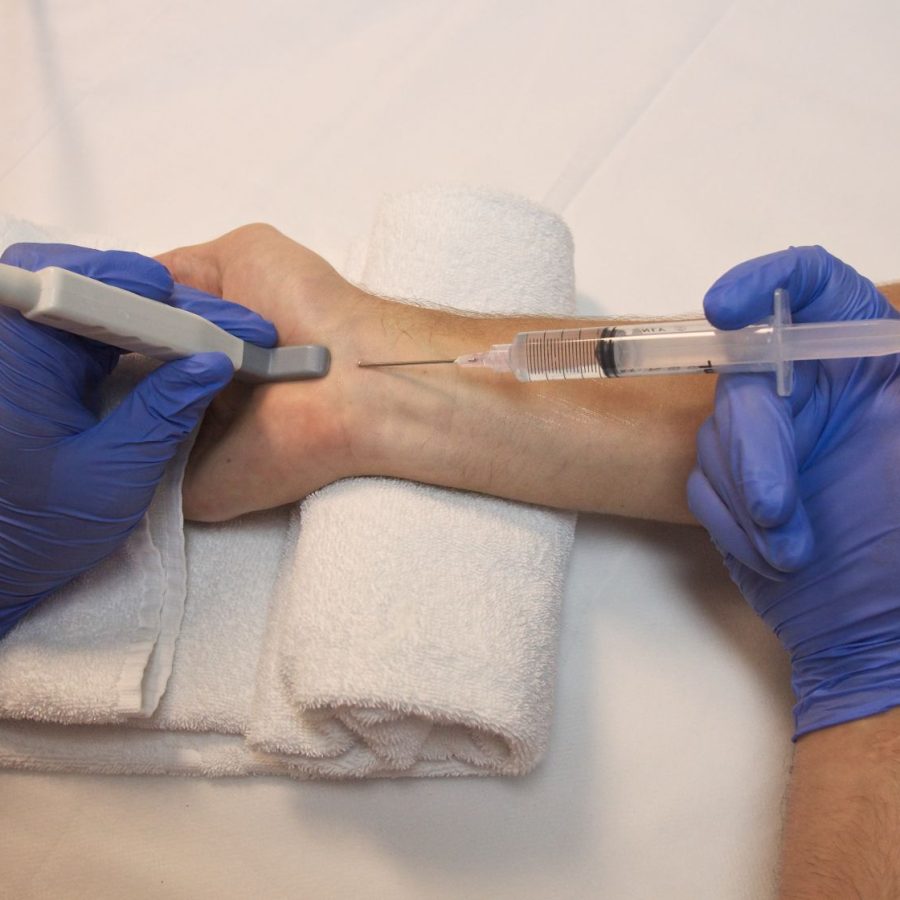
Injections can ease pain and inflammation in most joints and in the tendons and bursae around them.
Your specialist will recommend the type of injection that best suits your condition.
The most common joint injection. A corticosteroid, usually combined with a local anaesthetic, reduces inflammation in a joint, tendon or bursa. The anaesthetic can ease pain within minutes, and the steroid usually starts to work within a few days. Relief can last from several weeks to several months, depending on the condition.
A larger-volume injection of sterile saline, local anaesthetic and steroid that stretches the stiffened shoulder capsule to help restore movement.
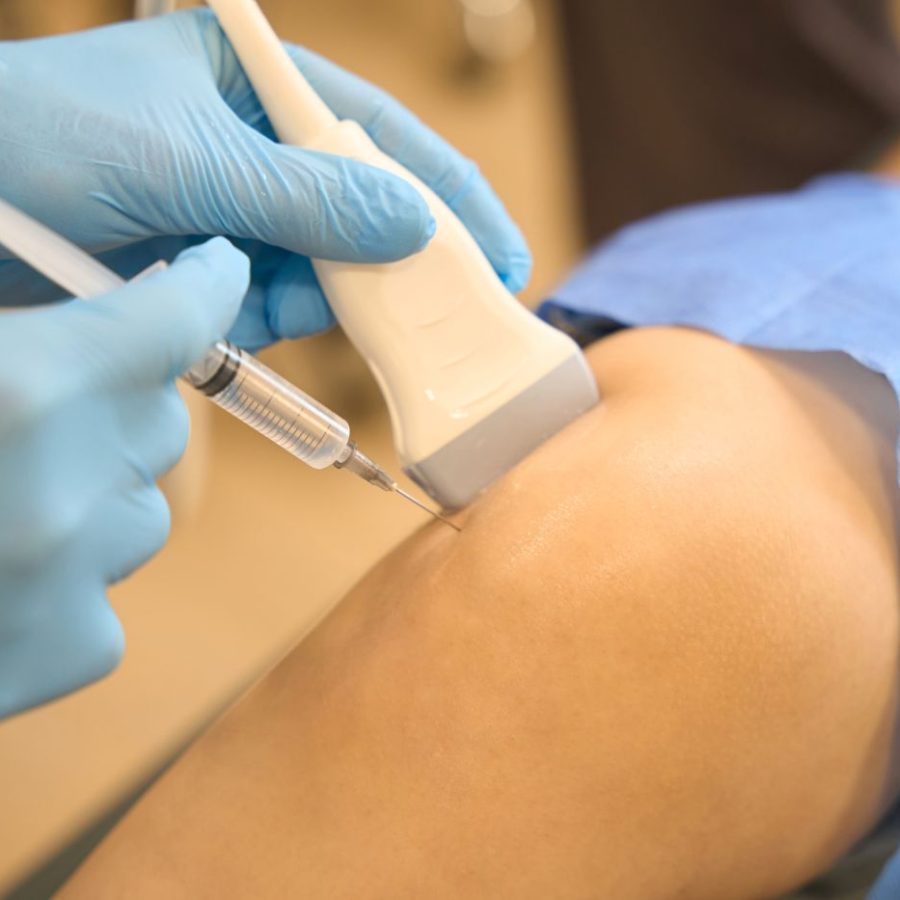
Some joints and tendons are small, deep or close to nerves and blood vessels. For these, an ultrasound-guided injection lets your doctor see inside the joint on screen and watch the needle reach exactly the right spot.
Ultrasound guidance can:
Not every injection needs ultrasound. For some larger joints, such as the knee, an experienced doctor can inject accurately using anatomical landmarks. Your specialist will advise which approach is best for you.
Book a joint injection appointment Call us on 01829 863 331For certain joints such as shoulders and knees, you can book a joint injection appointment directly with one of our GPs. Your GP will assess you and, if an injection is right for you, this will be given in the same appointment.
If you’d like to see a consultant, or your joint isn’t one our GPs inject, you’ll start with an initial consultation. Our specialists can treat the same joints as our GPs, as well as others within their area of expertise. Your specialist will assess you, confirm whether an injection is the right treatment, and arrange it with you.
Your GP or specialist asks about your symptoms, medical history and any medication you take, and examines the painful area to confirm an injection is the right treatment.
If your doctor uses ultrasound, they scan the area first to look at the joint or tendon and plan the injection.
Your doctor explains the benefits, risks and alternatives, and answers your questions. Nothing goes ahead without your agreement.
The skin is cleaned and the injection is given, usually in just a few minutes. Most people feel only brief discomfort.
You’ll get clear advice on rest, activity and what to expect over the next few days, plus exercises where they’ll help your recovery.
Joint injections at Enigma Healthcare are given by our GPs and consultant specialists, each within their own area of expertise. Who you see depends on the joint and the cause of your pain.
| Clinician | Joints they inject | How to book |
|---|---|---|
| Our GPs | Knees & shoulders | Book directly |
| Dr Phil Clelland, Consultant in Sport & Exercise Medicine | All joints | Initial consultation first |
| Mr Marck Van Liefland, Consultant Orthopaedic Surgeon | Shoulder, elbow, wrist and hand | Initial consultation first |
| Dr Kiran Putchakayala and Dr Shyra Rajakulendran, Consultant Rheumatologists | Any joint affected by a rheumatological condition, such as rheumatoid arthritis or gout | Initial consultation first |
| Mr Andrew Williams, Consultant Podiatrist | Foot and ankle | Initial consultation first |
Dr Patiniott can inject shoulders, trigger fingers, base of thumb joints (MCPJ's), de quervain's tenosynovitis, trochanteric bursitis and knees. Joint Injections with our GP's are always carried at the discretion of the Doctor. If our doctor believes it's not clinically appropriate, the wrong diagnosis or contra-indicated, then they wouldn't carry out the procedure.
Dr Ayaz Damani can inject shoulders and knees. Joint Injections with our GP's are always carried at the discretion of the Doctor. If our doctor believes it's not clinically appropriate, the wrong diagnosis or contra-indicated, then they wouldn't carry out the procedure.
Appointments can be selected with either Dr Shyra Raj or Dr Kiran K Putchakayala
Marck is a private Orthopaedic Consultant, specialising in disorders of the shoulder, elbow and hand.
Most people have joint injections without any problems. As with any medical treatment, there are some possible side effects, which your doctor will discuss with you before you decide.
You can usually go home straight away. Your doctor may advise resting the joint for a day or two and avoiding strenuous activity, before gradually returning to normal. The local anaesthetic wears off within a few hours, and the steroid usually starts to work within a few days.
Contact us, or seek urgent medical advice, if the joint becomes hot, red and increasingly painful, or you develop a fever, as these can be signs of infection.
Joint injections are a good option for those suffering from chronic joint pain or inflammation that hasn’t responded well to other treatments. Your clinician will assess your condition and discuss if this treatment is suitable for you.
You may experience some mild soreness or swelling at the injection site for a few days. It’s important to avoid strenuous activity immediately after the procedure to allow the joint to heal.
The need for further injections depends on the individual’s condition and response to the first injection. Your clinician will discuss your treatment plan and advise if additional injections are necessary for long-term relief.
Joint injection procedures are usually quick and typically take around 15-20 minutes.
Joint injections are generally safe and performed by experienced clinicians. While side effects are rare, they can include temporary soreness at the injection site, facial flushing, or changes in blood sugar levels. Your clinician will discuss any potential risks with you prior to treatment.
Most patients begin to feel relief within a few days to a week after the injection. The effects can last anywhere from a few weeks to several months, depending on the severity of the condition and individual response to treatment.
The injection itself may cause some temporary discomfort, but the procedure is generally quick and well-tolerated. Local anaesthesia may be used to numb the area and make the process more comfortable.
Joint injections involve the injection of a corticosteroid (hydrocortisone) directly into the affected joint. The steroid works to reduce inflammation and swelling, providing pain relief and improving movement in the joint.
Joint injections are primarily used to reduce pain and inflammation in joints affected by conditions such as arthritis, osteoarthritis, tendonitis, and bursitis. They can help improve mobility and relieve discomfort in areas like the elbow, knee, shoulder, and wrist.
Yes, joint injections can be used to treat pain in various joints, including the knee, shoulder, elbow, wrist, and hip, depending on the location of your pain and inflammation.
If you have more questions or would like to know if joint injections are right for you, please get in touch with our team. We’re here to help you get back to a pain-free, active lifestyle!
Tell us about your symptoms and a member of our team will get back to you personally, and help you book with the right specialist.
Prefer to talk straight away? Call us on 01829 863 331.